Showing posts with label Directors in the Top 1000. Show all posts
Sunday, December 11, 2011
Top Ranked Films of Nicholas Ray
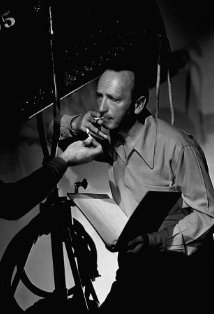
Nicholas Ray
4 titles, 80th in points with 10,267
Nicholas Ray was a maverick and innovative American director who had great influence on other younger directors, especially in Europe. Before directing, Ray was close friends through radical theater in New York with Elia Kazan, and when Kazan got his first directing job for A Tree Grows in Brooklyn, he hired Ray as first assistant director, which was Ray’s introduction to filmmaking. His films usually featured alienated characters, existing in their own solitude.
These are all the films of classic American director Nicholas Ray that made the top 1000 in our 2011 update of the Top Ranked 1000 Films on the Net, all polls.
1. Rebel Without a Cause (1955) #265
2. Johnny Guitar (1954) #387
3. In a Lonely Place (1950) bw #392 My favorite Bogart performance, a great underrated film
4. Bigger Than Life (1956) #793
Just Out of the Top 1000
5. They Live by Night (1948) #1089
6. Lusty Men, The (1952) #1404
He’s really underrated here as all six of these films could be in the top 1000, and In a Lonely place could be ranked much higher, certainly in the top 150.
My favorite of Ray’s (and a candidate for my all-time top 100) is the underappreciated In a Lonely Place, which features Humphrey Bogart’s most complex, vulnerable performance, as well as Gloria Grahame’s most memorable and subtle; she won a supporting Oscar® for something far much less than this in The Bad and the Beautiful, with a tiny part as a southerner’s shallow wife. It’s about a screenwriter (Bogart), who hires a girl to pre-read a novel for him to get her ideas before he turns it into a screenplay, and the girl shows up dead the next day; he’s the last person to see her alive, so he’s the prime suspect. Gloria Grahame is a neighbor who lives in the same small quadraplex of apartments, and who can see who comes and goes into Bogart’s apartment below hers. Grahame was also Ray’s second wife, but it ended disastrously after Ray caught her in bed with his son from his first wife. (She later married his son, Anthony Ray; of Grahame, he said “I was infatuated with her, but I didn’t like her very much”)
I thought Rebel Without a Cause a little too laden with melodramatic histrionics, but still it’s a classic of teen angst, just a bit melodramatic in parts - what’s with all the weeping? Normal people have these same feelings without responding this way, though I guess you could argue that James Dean externalized through acting what most people keep bottled up inside due to social decorum. Ray let Dean both inprovise and direct some scenes, even though he was a stage actor in his first film, and he certainly created a memorable debut. Both Natalie Wood and Sal Mineo were 15-yr olds, and both were nominated for supporting acting Oscars®. I liked it, but would flip Lonely Place and Rebel in my rankings. The public prefers Rebel, obviously.
Johnny Guitar is a very offbeat western, a film Ray himself hated making. It features Sterling Hayden as a singing gunslinger and boyfriend of Joan Crawford, who runs a bar in the middle of nowhere - but he’s hardly in the Gene Autrey-Roy Rogers mold, after all, this man was Jack D. Ripper in Dr. Strangelove (1964), and he’s always a little offbeat. This western also has perhaps the only all-female gunfight in cinema, certainly at that point in history.
They Live By Night is Ray’s first film, and is another about alienation of youth, like the later Rebel. This should probably be in the top 1000, it’s close at #1089. The Lusty Men is another good film for Robert Mitchum, and is a modern western worth seeing; it’s a better than average rodeo story, but not quite Hud (1964) either.
Ray’s career ended far too abrubtly, after making the big budget films King of Kings (1961), and 55 Days in Peking (1963) - he had a major heart attack during the filming of Peking and retire from filmmaking.
Here’s an excellent biography on him at IMDB, from fan Goodbye Ruby Tuesday, it’s the longer one here labels mini-biography, but’s it’s pretty thorough -
The Nicholas Ray Foundation, which has this quote from Ray, “Film recognizes neither time nor space, only the limits of man’s imagination”
Ray Quotes:
As a human being, Joan Crawford is a great actress.
If it were all in the script, why make the film?
The imagination is a pretty precious source of protection.
The closer I get to my ending, the closer I am getting to rewriting my beginning.
See the full list of top ranked 100 directors here: Top Ranked 100 Directors, 2011 Edition
4 titles, 80th in points with 10,267
Nicholas Ray was a maverick and innovative American director who had great influence on other younger directors, especially in Europe. Before directing, Ray was close friends through radical theater in New York with Elia Kazan, and when Kazan got his first directing job for A Tree Grows in Brooklyn, he hired Ray as first assistant director, which was Ray’s introduction to filmmaking. His films usually featured alienated characters, existing in their own solitude.
These are all the films of classic American director Nicholas Ray that made the top 1000 in our 2011 update of the Top Ranked 1000 Films on the Net, all polls.
1. Rebel Without a Cause (1955) #265
2. Johnny Guitar (1954) #387
3. In a Lonely Place (1950) bw #392 My favorite Bogart performance, a great underrated film
4. Bigger Than Life (1956) #793
Just Out of the Top 1000
5. They Live by Night (1948) #1089
6. Lusty Men, The (1952) #1404
He’s really underrated here as all six of these films could be in the top 1000, and In a Lonely place could be ranked much higher, certainly in the top 150.
My favorite of Ray’s (and a candidate for my all-time top 100) is the underappreciated In a Lonely Place, which features Humphrey Bogart’s most complex, vulnerable performance, as well as Gloria Grahame’s most memorable and subtle; she won a supporting Oscar® for something far much less than this in The Bad and the Beautiful, with a tiny part as a southerner’s shallow wife. It’s about a screenwriter (Bogart), who hires a girl to pre-read a novel for him to get her ideas before he turns it into a screenplay, and the girl shows up dead the next day; he’s the last person to see her alive, so he’s the prime suspect. Gloria Grahame is a neighbor who lives in the same small quadraplex of apartments, and who can see who comes and goes into Bogart’s apartment below hers. Grahame was also Ray’s second wife, but it ended disastrously after Ray caught her in bed with his son from his first wife. (She later married his son, Anthony Ray; of Grahame, he said “I was infatuated with her, but I didn’t like her very much”)
I thought Rebel Without a Cause a little too laden with melodramatic histrionics, but still it’s a classic of teen angst, just a bit melodramatic in parts - what’s with all the weeping? Normal people have these same feelings without responding this way, though I guess you could argue that James Dean externalized through acting what most people keep bottled up inside due to social decorum. Ray let Dean both inprovise and direct some scenes, even though he was a stage actor in his first film, and he certainly created a memorable debut. Both Natalie Wood and Sal Mineo were 15-yr olds, and both were nominated for supporting acting Oscars®. I liked it, but would flip Lonely Place and Rebel in my rankings. The public prefers Rebel, obviously.
Johnny Guitar is a very offbeat western, a film Ray himself hated making. It features Sterling Hayden as a singing gunslinger and boyfriend of Joan Crawford, who runs a bar in the middle of nowhere - but he’s hardly in the Gene Autrey-Roy Rogers mold, after all, this man was Jack D. Ripper in Dr. Strangelove (1964), and he’s always a little offbeat. This western also has perhaps the only all-female gunfight in cinema, certainly at that point in history.
They Live By Night is Ray’s first film, and is another about alienation of youth, like the later Rebel. This should probably be in the top 1000, it’s close at #1089. The Lusty Men is another good film for Robert Mitchum, and is a modern western worth seeing; it’s a better than average rodeo story, but not quite Hud (1964) either.
Ray’s career ended far too abrubtly, after making the big budget films King of Kings (1961), and 55 Days in Peking (1963) - he had a major heart attack during the filming of Peking and retire from filmmaking.
Here’s an excellent biography on him at IMDB, from fan Goodbye Ruby Tuesday, it’s the longer one here labels mini-biography, but’s it’s pretty thorough -
The Nicholas Ray Foundation, which has this quote from Ray, “Film recognizes neither time nor space, only the limits of man’s imagination”
Ray Quotes:
As a human being, Joan Crawford is a great actress.
If it were all in the script, why make the film?
The imagination is a pretty precious source of protection.
The closer I get to my ending, the closer I am getting to rewriting my beginning.
See the full list of top ranked 100 directors here: Top Ranked 100 Directors, 2011 Edition
Thursday, December 8, 2011
Top Ranked Films of Ernst Lubitsch
Ernst Lubitsch
5 titles, 72nd in points with 11,597
Born in Berlin, Germany in 1892, Lubitsch came to Hollywood in 1922 (contracted as director by Mary Pickford), then made his mark with a too short career of classic comedies, dying there in 1947 at age 55 after his sixth heart attack. What’s called The Lubitsch Touch is a sophisticated comedy of manners, a term applied after a few successful American comedies. Critic Michael Wilmington said 'made by a man amused by sex, not afraid of it'.
These are all the films of classic American director Ernst Lubitsch that made the top 1000 in our 2011 update of the Top Ranked 1000 Films on the Net, all polls.
1. Trouble in Paradise (1932) bw#322
2. To Be or Not to Be (1942) #331
3. Ninotchka (1939) #471
4. The Shop Around the Corner (1940)#561
5. Angel (1937) #980
Out of the top 1000
6. Design for Living (1933) #1104
7. Heaven Can Wait (1943) #1887
These are all very memorable films. My favorite is also Trouble in Paradise, #1 of his films, which is a pre-code film that is rather risque by comparison to most; it involves two con-artists who use romance to fleece their suspects, while the two remain just platonic friends, more like real co-workers. For me, it was easily the best film of 32 (Grand Hotel won, which was ok but not as involving as one would think, and best pic was its only Oscar). In Trouble, you get the idea that a lot more is going on in the dark, because the film is full of innuendos and other signs that there’s a lot of unseen action.
The Shop Around the Corner was a very good romantic comedy, and one that has proven so classic that’s it’s been remade twice more, as In The Good Ole Summertime, and You’ve Got Mail. The basic premise is that two co-workers who are not very friendly to each other are secret admirers as pen pals, and plan to get together to meet face-to-face sometime. Since they work together, it’s hard for them to both be off at the same time, which adds to the delay of them finding out their admirer’s true identities (which of course, are each other). Classic situation comedy, and each film has been popular, but Lubitsch’s was the first, and is still the best. It was his own personal favorite of all of his films.
I never did get To Be or Not To Be, however (though many other obviously do); for me, it wasn’t very funny (I never find the Nazis comic material), and it wasn’t a very good drama either (Benny and Lombard in a spy film?), so I’m not sure what it is besides boring. Jack Benny, though at his best here, is no actor, and is only barely a comedian; his schtick worked better on tv when it was over quickly. It’s the slow delivery followed by the slow double-take, and that’s about all he ever does. Ninotchka is just ok, it moves pretty slowly, and Garbo had laughed quite heartily in The Painted Veil (1934), so not a lot new here. It was a pre-cold war comedy about the soviets, it just didn’t have much spark so the humor was lukewarm, especially for a Billy Wilder penned script.
Leaving his funeral, Billy Wilder said ‘no more Lubitsch’. William Wyler replied ‘worse than that – no more Lubistch pictures’.
See the full list of top ranked 100 directors here: Top Ranked 100 Directors, 2011 Edition
5 titles, 72nd in points with 11,597
Born in Berlin, Germany in 1892, Lubitsch came to Hollywood in 1922 (contracted as director by Mary Pickford), then made his mark with a too short career of classic comedies, dying there in 1947 at age 55 after his sixth heart attack. What’s called The Lubitsch Touch is a sophisticated comedy of manners, a term applied after a few successful American comedies. Critic Michael Wilmington said 'made by a man amused by sex, not afraid of it'.
These are all the films of classic American director Ernst Lubitsch that made the top 1000 in our 2011 update of the Top Ranked 1000 Films on the Net, all polls.
1. Trouble in Paradise (1932) bw#322
2. To Be or Not to Be (1942) #331
3. Ninotchka (1939) #471
4. The Shop Around the Corner (1940)#561
5. Angel (1937) #980
Out of the top 1000
6. Design for Living (1933) #1104
7. Heaven Can Wait (1943) #1887
These are all very memorable films. My favorite is also Trouble in Paradise, #1 of his films, which is a pre-code film that is rather risque by comparison to most; it involves two con-artists who use romance to fleece their suspects, while the two remain just platonic friends, more like real co-workers. For me, it was easily the best film of 32 (Grand Hotel won, which was ok but not as involving as one would think, and best pic was its only Oscar). In Trouble, you get the idea that a lot more is going on in the dark, because the film is full of innuendos and other signs that there’s a lot of unseen action.
The Shop Around the Corner was a very good romantic comedy, and one that has proven so classic that’s it’s been remade twice more, as In The Good Ole Summertime, and You’ve Got Mail. The basic premise is that two co-workers who are not very friendly to each other are secret admirers as pen pals, and plan to get together to meet face-to-face sometime. Since they work together, it’s hard for them to both be off at the same time, which adds to the delay of them finding out their admirer’s true identities (which of course, are each other). Classic situation comedy, and each film has been popular, but Lubitsch’s was the first, and is still the best. It was his own personal favorite of all of his films.
I never did get To Be or Not To Be, however (though many other obviously do); for me, it wasn’t very funny (I never find the Nazis comic material), and it wasn’t a very good drama either (Benny and Lombard in a spy film?), so I’m not sure what it is besides boring. Jack Benny, though at his best here, is no actor, and is only barely a comedian; his schtick worked better on tv when it was over quickly. It’s the slow delivery followed by the slow double-take, and that’s about all he ever does. Ninotchka is just ok, it moves pretty slowly, and Garbo had laughed quite heartily in The Painted Veil (1934), so not a lot new here. It was a pre-cold war comedy about the soviets, it just didn’t have much spark so the humor was lukewarm, especially for a Billy Wilder penned script.
Leaving his funeral, Billy Wilder said ‘no more Lubitsch’. William Wyler replied ‘worse than that – no more Lubistch pictures’.
See the full list of top ranked 100 directors here: Top Ranked 100 Directors, 2011 Edition
Wednesday, December 7, 2011
Top Ranked Films of Leo McCarey
Leo McCarey
4 titles, 70th in points with 11,916
McCarey had a great touch with comedy, directing the best Marx Brothers film, and his own top rated film, Duck Soup. He won a directing Oscar® for 37’s The Awful Truth, a sparkling comedy with Cary Grant and Irene Dunne, then a 2nd for directing, and 1st for writing, for Going My Way (1944), which also netted Oscars® for best picture, and for actors Bing Crosby and Barry Fitzgerald. However, it made no polls this time, it wasn’t even mentioned.
These are all the films of classic American director McCarey’s that made the top 1000 in our 2011 update of the Top Ranked 1000 Films on the Net, all polls.
1. Duck Soup (1933) #53
2. The Awful Truth (1937) #515
3. Make Way for Tomorrow (1937) #633
4. Affair to Remember, An (1957) #791 This is the inferior remake of his own Love Affair (1939)
Out of the top 1000
5. Bells of St. Mary's, The (1945) #1988
To this list I would definitely add Love Affair (1939), a poignant love drama remade as a glossy 50’s color magazine looking shoot as An Affair to Remember with Cary Grant and Deborah Kerr in the roles originally played by Charles Boyer and Irene Dunne. I didn’t find this version as moving, and consider Love Affair McCarey’s best drama.
See the full list of top ranked 100 directors here: Top Ranked 100 Directors, 2011 Edition
Tuesday, December 6, 2011
Top Ranked Films of Carol Reed
Reed directing Mark Lester in Oliver!
Carol Reed
3 titles, 71st in points with 11,909
These are all the films of classic British director Carol Reed’s that made the top 1000 in our 2011 update of the Top Ranked 1000 Films on the Net, all polls.
1. The Third man (1949) bw#23
2. Fallen Idol, The (1948) #490
3. Odd Man Out (1947) bw #634
Mostly noted for the noirish The Third Man (which I found spoiled by incessant zither music), I actually prefer Odd Man Out (featuring a young, intense James Mason) and his adaptation of Conrad’s novel Outcast of the Islands (1951), with Trevor Howard as a white man in a tropical island paradise (in Malaysia) who sells his soul for money. This film should be ranked, it’s the best adaptation, to me, of any of Joseph Conrad’s novels, who was Polish but learned to write in English as he considered it the language of literature. His resulting works are terrific, especially the shorter ones like this, Heart of Darkness, Almayer’s Folly (the prequel to this story, which also stars Robert Morley as Almayer, a British merchant in the same Malaysian islands), and The Nigger of the Narcissus.
Also missing is his musical adaptation of the stage musical based on Dickens’ Oliver Twist, Oliver! (1967) [photo top] and which won the best picture Oscar® for that year.
See the full list of top ranked 100 directors here: Top Ranked 100 Directors, 2011 Edition
Sunday, December 4, 2011
Top Ranked Films of John Cassavetes
Cassavetes, John
5 titles, 66th in points with 12,669
John Cassavetes was a so-so actor, best known as Mia Farrow's husband in Rosemary's Baby, who would rather have been behind the camera, so he picked one up and improvised a few films. The only problem with his improvised films is they look like higher class home movies, with friends like Peter Falk and Ben Gazzara hanging out with Cassavetes himself, all in front of the camera. They look like a would-be rat pack just hanging out and having fun (basically bulling about women), they don’t look and feel like real movies, with a point or even a style. His better films don’t look improvised, like A Woman Under the Influence and Minnie and Moscowitz, but some may like the easy-going nonchalant style of Faces, Shadows, Husbands, Killing of a Chinese Bookie. For me they seem a little effortless and half-baked.
These are all the films of American director John Cassavetes that made the top 1000 in our 2011 update of the Top Ranked 1000 Films on the Net, all polls.
1. Woman Under the Influence, A (1974) #177
2. Faces (1968) #434
3. Shadows (1959) #451
4. Killing of a Chinese Bookie, The (1976) #552
5. Love Streams (1984) #808
Out of the top 1000
6. Opening Night (1977) #1077
7. Husbands (1970) #1223
For me, his most engaging film is missing, Minnie and Moscowitz, starring Seymour Cassel and Cassavetes wife (and often star) Gena Rowlands as two people no one seems to want who find each other in a romance of misfits, she being a museum curator, while he is a parking lot attendant.
Cassavetes and Gena Rowlands
A Woman Under the Influence is easily the best acted of these, garnering Gena Rowlands a best actress nomination, but like many other films about alcoholics (Days of Wine and Roses, Leaving Las Vegas) it’s just a major drag to sit through as an audience. It’s hard to make a film about this into something really unique, the whole genre needs the literal shot in the arm that Darren Aronofsky gave addiction in Requiem For a Dream (2000).
See the full list of top ranked 100 directors here: Top Ranked 100 Directors, 2011 Edition
Saturday, December 3, 2011
Top Ranked Films of John Lasseter
John Lasseter
3 toy titles, 63rd in points with 12,806
John Lasseter's main claim to fame (and we're all grateful) was as basically the idea behind, and the co-founder of Pixar Studios, with dollar help from Steve Jobs of Apple Computer. Lasseter was working as an animator at his dream job, for Disney (he also once operated the adventureland boat ride at Disneyland!), when he was told to experiment with using computer animation. He was still using hand cel animation for the characters, while using computers to control the background and scenery animation. After a year of this, which was slow as any new media would be, Disney let him go, telling him "you're wasting our time."
He continued this dream but had no money for implementing it. Ironic that capitalism, while claiming to be entrepreneurial based, really only supports those wealthy enough to create companies and jobs, that there is little or no government support for startups and other ideas that eventually will generate revenue and therefore tax dollars for the system. So it's a system closed to average people, who usually (just based on numbers alone) come up with most original ideas in the first place, like Lasseter and Disney, so most of these ideas generate the windfall revenue for the owners, not the creators.
Seeking someone with capital, Lasseter was able to convince Steve Jobs of Apple Computers that his dream was a viable one, and one that would likely generate revenue, so Jobs became backer and co-founder of Pixar, who created the films, subsequently a deal was worked out with Disney to distribute the films, using the network and clout they already had in place.
Lasseter's first success was Tin Toy (1988), a short animated film involving a pretty stiff baby and some toys, winning an Oscar® for animated short. The toys turned out to be easier to animate in the new medium, as hair especially proved problematic (if you remember, it always looked like sheets of plastic in the beginning, like Max Headroom). Lasseter's first envisioned film actually involved a robot, and was eventually made in 2008 as Wall-E (perhaps the best animated film ever) [photo below], but it took Pixar about 10-12 years to get to the technical level to create Wall-E as envisioned.
The toys came easier, so the first full-length Pixar release was Toy Story in 1994 - I believe it grossed 60 million it's first weekend, which made it the most successful animated feature in history right away. Lasseter's studio has since gone on to make about a dozen terrific films, with Wall-E and Finding Nemo probably my favorite two, but it's staple has always been the Toy Story series, and all three are Lasseter's only ranked films as director.
He usually produces the other Pixar films and lets newer directors take that role, such as Andrew Stanton on Wall-E and Peter Docter on Up. I also enjoyed Cars, having spent months on Route 66 growing up in three separate trips. For newer generations who don't know the original highway, this story won't be as touching as it is to those of us over 50, but it's truly about the death of a great U.S. highway, one that had a life of its own that's now gone forever, bypassed by progress and the lack of foresight to put the new highway on the old route.
These are all the films of American animation director John Lasseter that made the top 1000 in our 2011 update of the Top Ranked 1000 Films on the Net, all polls.
1. Toy Story (1995) #72
2. Toy Story 3 (2010) #180
3. Toy Story 2 (1999) #485
My favorite is now the last, Toy Story 3 - which was so good that it was nominated for six Oscars®, including best screenplay and best picture, the first animated feature ever nominated for picture (although in a year when they had expanded that award to 10 nominees), though Beauty and the Beast (1991), Finding Nemo (2003), and Wall-E all could have been, in my opinion - all three were certainly as worthy as all five real-action films in their years. I think it's the stories that have improved, the screenplays - they've perfected the art of humanizing the toys to the point that, like Wall-E the robot, they remind us of ourselves, so they become identifiable and realistic characters as a result, enabling us to empathize with their situations.
I was especially touched by the metaphor of aging applied in Toy Story 3, even though the toys don't get old, their human counterpoints do and the toys' lives irrevocably change as a result, just like for real humans. For me, this is brilliant storytelling, and they're putting it in a medium appreciated by all ages, down to about three years old. That is both art and magic, the creation of a new mythos for a new age. This is what cultures do, and our current medium for our modern mythos is cinema, which has replaced traditional art and books in this endeavor. Popular sentiment will alway change because we progress and evolve over time.
Lasseter himself has won 28 awards, including one Oscar®, for the Toy Story 3 screenplay (ironic, he wins one for writing, but it's a terrific screenplay and well-deserved) with over 40 nominations overall.
NOTE: Walt Disney has a long anti-labor history. Two terrific early animators quit over a contract dispute with Walt in the late 20's (he renigged on promises), named Ray Ising and Hugh Harman, and they started their own animated shorts called Happy Harmonies, renamed them Merry Melodies, became partners with Warner Brothers, and along with the Looney Toons, created the greatest pantheon of animated characters in history: Bugs Bunny, Porky Pig, Elmer Fudd, Daffy Duck, Yosemite Sam ("I smell a varmint!"), Sylvester and Tweety, Foghorn C. Leghorn, the Tasmanian Devil, and many more. Late in the series they created a cat and mouse cartoon, called "Puss n Boots", who were later simplified and renamed Tom and Jerry, winning several Oscars under that title for cartoon shorts.
Yep - and while at Disney these two created nearly every character after Mickey Mouse - they were responsible for Donald Duck, Goofy, Pluto, even Minnie Mouse. Some people never learn to give equal financial footing for the real creators, since they have basically a slave mentality - I'm the owner and the workers are my volunteered slaves. In this case Disney's creative cartoon output was nearly eclipsed by the Merry Melodies series, still popular today. How many people do you know that still watch 30's Donal Duck or Mickey Mouse cartoons by comparison? There's also not nearly as many because Harman and Ising were producing their voluminous output elsewhere. (There's likely a thousand Warner Bros. cartoon shorts compared to 200-300 Disney ones).
See the full list of top ranked 100 directors here: Top Ranked 100 Directors, 2011 Edition
3 toy titles, 63rd in points with 12,806
John Lasseter's main claim to fame (and we're all grateful) was as basically the idea behind, and the co-founder of Pixar Studios, with dollar help from Steve Jobs of Apple Computer. Lasseter was working as an animator at his dream job, for Disney (he also once operated the adventureland boat ride at Disneyland!), when he was told to experiment with using computer animation. He was still using hand cel animation for the characters, while using computers to control the background and scenery animation. After a year of this, which was slow as any new media would be, Disney let him go, telling him "you're wasting our time."
He continued this dream but had no money for implementing it. Ironic that capitalism, while claiming to be entrepreneurial based, really only supports those wealthy enough to create companies and jobs, that there is little or no government support for startups and other ideas that eventually will generate revenue and therefore tax dollars for the system. So it's a system closed to average people, who usually (just based on numbers alone) come up with most original ideas in the first place, like Lasseter and Disney, so most of these ideas generate the windfall revenue for the owners, not the creators.
Seeking someone with capital, Lasseter was able to convince Steve Jobs of Apple Computers that his dream was a viable one, and one that would likely generate revenue, so Jobs became backer and co-founder of Pixar, who created the films, subsequently a deal was worked out with Disney to distribute the films, using the network and clout they already had in place.
Lasseter's first success was Tin Toy (1988), a short animated film involving a pretty stiff baby and some toys, winning an Oscar® for animated short. The toys turned out to be easier to animate in the new medium, as hair especially proved problematic (if you remember, it always looked like sheets of plastic in the beginning, like Max Headroom). Lasseter's first envisioned film actually involved a robot, and was eventually made in 2008 as Wall-E (perhaps the best animated film ever) [photo below], but it took Pixar about 10-12 years to get to the technical level to create Wall-E as envisioned.
The toys came easier, so the first full-length Pixar release was Toy Story in 1994 - I believe it grossed 60 million it's first weekend, which made it the most successful animated feature in history right away. Lasseter's studio has since gone on to make about a dozen terrific films, with Wall-E and Finding Nemo probably my favorite two, but it's staple has always been the Toy Story series, and all three are Lasseter's only ranked films as director.
He usually produces the other Pixar films and lets newer directors take that role, such as Andrew Stanton on Wall-E and Peter Docter on Up. I also enjoyed Cars, having spent months on Route 66 growing up in three separate trips. For newer generations who don't know the original highway, this story won't be as touching as it is to those of us over 50, but it's truly about the death of a great U.S. highway, one that had a life of its own that's now gone forever, bypassed by progress and the lack of foresight to put the new highway on the old route.
These are all the films of American animation director John Lasseter that made the top 1000 in our 2011 update of the Top Ranked 1000 Films on the Net, all polls.
1. Toy Story (1995) #72
2. Toy Story 3 (2010) #180
3. Toy Story 2 (1999) #485
My favorite is now the last, Toy Story 3 - which was so good that it was nominated for six Oscars®, including best screenplay and best picture, the first animated feature ever nominated for picture (although in a year when they had expanded that award to 10 nominees), though Beauty and the Beast (1991), Finding Nemo (2003), and Wall-E all could have been, in my opinion - all three were certainly as worthy as all five real-action films in their years. I think it's the stories that have improved, the screenplays - they've perfected the art of humanizing the toys to the point that, like Wall-E the robot, they remind us of ourselves, so they become identifiable and realistic characters as a result, enabling us to empathize with their situations.
I was especially touched by the metaphor of aging applied in Toy Story 3, even though the toys don't get old, their human counterpoints do and the toys' lives irrevocably change as a result, just like for real humans. For me, this is brilliant storytelling, and they're putting it in a medium appreciated by all ages, down to about three years old. That is both art and magic, the creation of a new mythos for a new age. This is what cultures do, and our current medium for our modern mythos is cinema, which has replaced traditional art and books in this endeavor. Popular sentiment will alway change because we progress and evolve over time.
Lasseter himself has won 28 awards, including one Oscar®, for the Toy Story 3 screenplay (ironic, he wins one for writing, but it's a terrific screenplay and well-deserved) with over 40 nominations overall.
NOTE: Walt Disney has a long anti-labor history. Two terrific early animators quit over a contract dispute with Walt in the late 20's (he renigged on promises), named Ray Ising and Hugh Harman, and they started their own animated shorts called Happy Harmonies, renamed them Merry Melodies, became partners with Warner Brothers, and along with the Looney Toons, created the greatest pantheon of animated characters in history: Bugs Bunny, Porky Pig, Elmer Fudd, Daffy Duck, Yosemite Sam ("I smell a varmint!"), Sylvester and Tweety, Foghorn C. Leghorn, the Tasmanian Devil, and many more. Late in the series they created a cat and mouse cartoon, called "Puss n Boots", who were later simplified and renamed Tom and Jerry, winning several Oscars under that title for cartoon shorts.
Yep - and while at Disney these two created nearly every character after Mickey Mouse - they were responsible for Donald Duck, Goofy, Pluto, even Minnie Mouse. Some people never learn to give equal financial footing for the real creators, since they have basically a slave mentality - I'm the owner and the workers are my volunteered slaves. In this case Disney's creative cartoon output was nearly eclipsed by the Merry Melodies series, still popular today. How many people do you know that still watch 30's Donal Duck or Mickey Mouse cartoons by comparison? There's also not nearly as many because Harman and Ising were producing their voluminous output elsewhere. (There's likely a thousand Warner Bros. cartoon shorts compared to 200-300 Disney ones).
See the full list of top ranked 100 directors here: Top Ranked 100 Directors, 2011 Edition
Friday, December 2, 2011
Top Ranked Films of Michael Curtiz
Michael Curtiz
3 titles, 69th in points with 12,398
Born Manó Kertész Kaminer in Budapest, Hungary in 1886. After acting in then directing films there, Kaminer moved the the U.S. in 1926 to begin directing movies in Hollywood, and of course, created a stage name. He directed films first as Kertész Mihály, then in the U.S. as Michael Kertész. He has 173 film titles to his credit as director overall, with around 110 of those in the U.S. Probably the first film of his everyone knows is The Kennel Murder Case (1933), with William Powell in one of his earliest detective films, followed by Captain Blood with Errol Flynn in 1935.
These are all the films of classic (Hungarian) American director Michael Curtiz that made the top 1000 in our 2011 update of the Top Ranked 1000 Films on the Net, all polls.
1. Casablanca (1942) bw#55
2. The Adventures of Robin Hood (1938) w. Wm Keighley #227
3. Mildred Pierce (1945) #599
Out of the top 1000
4. Yankee Doodle Dandy (1942) #1511
Of course, the top two here are classics, one could argue that Casablanca is the best romance in cinema, it certainly wins popular polls for that title. It seems to have found the perfect spot between sentimentality and cynicism, all mirrored in Bogart’s face. How they don’t award Oscars® for cinema-defining moments like this is beyond my comprehension; they reward Bogart later for the far inferior performance in The African Queen, which was almost a parody of Bogart and Huston’s real personalities during the making of this film according to Katharine Hepburn – they never got dysentary like everyone else because they were so tanked up on alcohol that not even bacteria could survive. Now that’s funnier than anything in the African Queen.
His version of Robin Hood remains one of the most lively and colorful; it playfully captures the feel of the original legendary myth – after all, it’s a band of merry men cavorting in the woods in tights! These are the people who invented the phrase ‘derring-do’, that pretty well sums it up. It’s a film of fluff and derring-do, all with gusto and tongue-in-cheek. For it’s time, this was some of the best technicolor ever put on film, it’s a beautiful palette to behold, one of my favorites (I’m a painter and a photographer, with a degree in Painting and Drawing).
The other two here are ok for one viewing, but mostly forgettable, though Joan Crawford did win a best actress Oscar® for Mildred Pierce, her performance is enough to make this a must see classic film, but it’s not a very powerful film.
The one film of Curtiz’ missing here is the better and more faithful version of Ernest Hemingway’s To Have and Have Not, The Breaking Point (1950) bw, starring an understated John Garfield and a smoothe as silk Patricia Neal, at an age when she was most tempting. This was Hemingway’s own favorite film adaptation of any of his works, and is definitely worth seeing. To Have and Have Not is the Hollywood version, and is still more entertaining thanks to it’s stars, Bogart, Bacall, in her first film, and Walter Brennan (“Was ya ever bit by a dead bee?”), but Breaking Point may actually be the better film, it's the more credible version.
See the full list of top ranked 100 directors here: Top Ranked 100 Directors, 2011 Edition
Top Ranked Films of Wong Kar-Wai
Wong Kar-Wai
5 titles, 69th in points with 12,544
For me, Hong Kong director Wong Kar-Wai is a visual genius, one of the most interesting directors currently working. I get so lost in the raw talent of the visual imagery that I don’t even notice the story (or lack of one). This may bother some people, but I’ll guarantee that many western filmmakers are being influenced by his work.
Chungking Express
Tarantino for one is a big fan. His breakthrough film Pulp Fiction was inspired by Kar-Wai’s films Chungking Express and it’s loose followup sequel Fallen Angels. These were intended to be one long film in three different parts (or stories), and Kar-Wai instead released Chunking first, which was the first two unrelated stories. It’s an amazing street style with blurred action and hand held camera movement that always serves to place the viewer in the middle of everything. For just the pure art of filmmaking, these are some of the most exciting films being made these days – he reminds me of Kubrick for films with visual impact.
Fallen Angels
These are all the films of classic director Wong Kar-Wai’s that made the top 1000 in our 2011 update of the Top Ranked 1000 Films on the Net, all polls.
1. In the Mood for Love (2001) #167
2. Chungking Express (1994) #363
3. Days of Being Wild (1990) #464
4. 2046 (2004) #789
5. Happy Together (1997) #823
Almost in the top 1000
6. Fallen Angels (1995) #1094 Sequel to Chungking Express is almost as good and should be in the top 500
In the Mood for Love [photo above] is a gorgeously shot love story, with color reminiscent of the early days of technicolor glory, say the color palette of Gone With the Wind or Black Narcissus, but darker than either.
Chungking and Fallen Angels are about street people doing everyday things, and some petty crimes that occur around them. 2046 continues the story of the lovers from In the Mood For Love, the number being that of a hotel room where they once met. Days of Being Wild isn’t quite as memorable but is still worth seeing. I’ve yet to see Happy Together, it’s at the top of my queue at Netflix, I’ve been saving it, I don’t want to see all his films at once.
Missing here is Ashes of Time Redux (1994), a wonderfully creative martial arts/samurai film, about a magic wine with the power to make one forget the past. It was apparently re-edited and re-released by Kar-Wai a decade after it’s original – I only saw the reissued version, but I liked and and it should be ranked as well.
See the full list of top ranked 100 directors here: Top Ranked 100 Directors, 2011 Edition
Thursday, December 1, 2011
Top Ranked Films of Yasujiro Ozu
Yasujiro Ozu
4 titles, 65th in points with 12,725
Japanese master Yasujiro Ozu makes beautifully designed films with an almost painter’s view of scenes. A movie buff from childhood, he got his start as a cameraman in 1923, then as assistant director before shooting his first film in 1927. His 54 films have won 14 awards (the awards page at IMDB), with these going to 8 different titles.
He often shoots the same scene from opposite sides to show it from the point of view of each character in a way, though you still see all the actors. His films may seem a little slower than other Japanese masters like Kurosawa, yet he still had 9 titles make the polls. If we included all 2280 films in our count, his total of 9 would have him tied for 10th overall with Fellini, though some others may have leapfrogged over this from below as well, so he’d probably be about 12th-15th, still pretty high esteem when you’re talking about all-time directors. Kurosawa had 13 total titles and is currently 4th overall in points.
These are all the films of classic Japanese director Ozu’s that made the top 1000 in our 2011 update of the Top Ranked 1000 Films on the Net, all polls.
1. Tokyo Story (1953) #76
2. I Was Born, But… (1932) #370
3. Late Spring (1949) #453
4. An Autumn Afternoon (1962) #746
Others just out of the top 1000
5. Early Summer (Bakushû, 1951) #1249
6. Floating Weeds (1959) #1431
7. Early Autumn #1544
8. Late Autumn (1960) #1814
9. Good Morning (1959) #2214
Other Japanese directors: Akira Kurosawais 4th, Hayao Miyazaki is 39th, Mizoguchi is 46th [The next Japanese directors after Ozu are Takahata at 182nd and Tore-eda at 204th]
See the full list of top ranked 100 directors here: Top Ranked 100 Directors, 2011 Edition
4 titles, 65th in points with 12,725
Japanese master Yasujiro Ozu makes beautifully designed films with an almost painter’s view of scenes. A movie buff from childhood, he got his start as a cameraman in 1923, then as assistant director before shooting his first film in 1927. His 54 films have won 14 awards (the awards page at IMDB), with these going to 8 different titles.
Floating Weeds (1959)
He often shoots the same scene from opposite sides to show it from the point of view of each character in a way, though you still see all the actors. His films may seem a little slower than other Japanese masters like Kurosawa, yet he still had 9 titles make the polls. If we included all 2280 films in our count, his total of 9 would have him tied for 10th overall with Fellini, though some others may have leapfrogged over this from below as well, so he’d probably be about 12th-15th, still pretty high esteem when you’re talking about all-time directors. Kurosawa had 13 total titles and is currently 4th overall in points.
The Story of Floating Weeds (1935)
These are all the films of classic Japanese director Ozu’s that made the top 1000 in our 2011 update of the Top Ranked 1000 Films on the Net, all polls.
1. Tokyo Story (1953) #76
2. I Was Born, But… (1932) #370
3. Late Spring (1949) #453
4. An Autumn Afternoon (1962) #746
Others just out of the top 1000
5. Early Summer (Bakushû, 1951) #1249
6. Floating Weeds (1959) #1431
7. Early Autumn #1544
8. Late Autumn (1960) #1814
9. Good Morning (1959) #2214
Other Japanese directors: Akira Kurosawais 4th, Hayao Miyazaki is 39th, Mizoguchi is 46th [The next Japanese directors after Ozu are Takahata at 182nd and Tore-eda at 204th]
Autumn Afternoon (1962) - this composition
is typical of how Ozu frames people
in everyday social situations
See the full list of top ranked 100 directors here: Top Ranked 100 Directors, 2011 Edition
Tuesday, November 29, 2011
Top Ranked Films of Rainer Werner Fassbinder
Rainer Werner Fassbinder
6 titles, 62nd in points with 12,837
German director Rainer Werner Fassbinder has 6 titles in the top 1000 (with one more making the polls), and is ranked 62nd among directors in points with 12,837. He's overranked to me, he's ahead of Michael Curtiz, Carol Reed, Ernst Lubitsch, and Wong Kar-Wai - also Ophuls, Demme, Melville, Ozu, and Nick Ray, each of whom are far more talented to me.
Somthing's just not right there. However, all his films but Ali have fallen in ranking since 2009, and that one has gone up only 25 spots, so he's declining in popularity over time.
These are all the films of German director Fassbinder’s that made the top 1000 in our 2011 update of the Top Ranked 1000 Films on the Net, all polls.
1. Berlin Alexanderplatz (1980) #279 a tv series, not a feature film; since it tells one long story, I included it as did most film polls - but by the same argument should one include the SF tv series "The Prisoner", which was about 3 hrs shorter, and was also one long continuous story? (and also much better than Alexanderplatz) - were this removed from the top 1000, Fassbinder would be ranked 91st, after Vincente Minnelli and before Brad Bird
2. Ali: Fear Eats the Soul (1971) #409
3. Marriage of Maria Braun, The (1979) #480
4. Bitter Tears of Petra von Kant, The (1972) #601
5. In a Year with 13 Moons (1978) #711
6. Fox and His Friends (1975) #957
Out of the top 1000
7. Veronika Voss (1982) #1541
I tried to watch Berlin, which is not a feature film but a 16-part tv miniseries, but it failed to involve me at all in the first four episodes, so I gave up on it, assuming that, like his feature-length films, that it would ultimately be boring throughout and unrewarding in the end. It follows an ex-con's life after his release from prison in the late 20's, and the approaching war. This is also how Ali hit me (where was the boxing? Lol..), also Marriage, Bitter Tears, and 13 Moons - slow and uninvolving. Realism however, if that's what you're after; everyday people with your same problems. The feeling I usually get from his films (afterwards) is 'how does one make sense of such a harsh world, and how do you fit into this individually'?
Your results may vary - you may find his slow soul-searching interesting but so far I haven’t, and I’ve given him chance after chance. For me, Werner Herzog is an infinitely more interesting German director, and the best director ever named Werner. His films are usually about characters with a major personal obsessions, such as Fitzcarraldo (1982) and Aguirre, The Wrath of God (1972). Les Blank's excellent documentary Burden of Dreams (1982), about the making of Fitzcarraldo, exposes these same traits in Herzog himself and is one of the best films made about the creative process of filmmaking, along with Heart's of Darkness: A Filmmaker's Apocalypse.
See the full list of top ranked 100 directors here: Top Ranked 100 Directors, 2011 Edition
This one photo is more interesting than any of his films
Wednesday, November 16, 2011
Top Ranked Films of Abbas Kiarostami
Abbas Kiarostami
7 titles (17th), but 67th in points with 12,625
These are all the films of Iranian director Abbas Kiarostami’s that made the top 1000 in our 2011 update of the Top Ranked 1000 Films on the Net, all polls. He actually tied for 17th among directors with this many titles, but the low rankings didn't add much to his point total.
1. Close-up (1990) #255
2. Taste of Cherry, A (1997) #522
3. Wind Will Carry Us, The (1999) #537
4. Ten (2002) #874
5. And Life Goes On (1991) #947
6. Certified Copy (2010) #907
7. Where is the Friend's Home? (1987) #948
also, just out of the top 1000
8. Through the Olive Trees (1994) #1011
I saw the top ranked film here, Close-Up, as my intro to Kiarostami, and was a bit disappointed. The film had a refreshing immediacy and seemed real, yet it was also amateurish, had terrible sound (at times unintelligible), and would not have made it to tv in the west just due to it’s lack of professional craftmanship. The film also reeked of propaganda, as an Iranian court was shown, which appeared to be thoughtful and fair (maybe they are, but not according to western media bias), so you also realize that the film had to clear Iranian censorship and likely could not be critical in any way.
I haven’t seen the rest of these, but will likely watch a couple more before I give up on Kiarostami’s professionalism, or decide that he’s an authorized shill for a psychotic regime that wants to further “God’s promised apocalypse on earth”. Not surprising that all these fundamentalist fanatics claim to follow God, yet they don’t trust in the deity to control events, so they want to cause the events themselves. (Because the long promised apocalypse has still never arrived, thousands of years later – maybe one day it’ll happen but so far it’s the worst prophecy in mankind’s history, as it’s zero for about 3000 years so far, and nearly every generation has claimed "this is the end time").
See the full list of top ranked 100 directors here: Top Ranked 100 Directors, 2011 Edition
7 titles (17th), but 67th in points with 12,625
These are all the films of Iranian director Abbas Kiarostami’s that made the top 1000 in our 2011 update of the Top Ranked 1000 Films on the Net, all polls. He actually tied for 17th among directors with this many titles, but the low rankings didn't add much to his point total.
1. Close-up (1990) #255
2. Taste of Cherry, A (1997) #522
3. Wind Will Carry Us, The (1999) #537
4. Ten (2002) #874
5. And Life Goes On (1991) #947
6. Certified Copy (2010) #907
7. Where is the Friend's Home? (1987) #948
also, just out of the top 1000
8. Through the Olive Trees (1994) #1011
I saw the top ranked film here, Close-Up, as my intro to Kiarostami, and was a bit disappointed. The film had a refreshing immediacy and seemed real, yet it was also amateurish, had terrible sound (at times unintelligible), and would not have made it to tv in the west just due to it’s lack of professional craftmanship. The film also reeked of propaganda, as an Iranian court was shown, which appeared to be thoughtful and fair (maybe they are, but not according to western media bias), so you also realize that the film had to clear Iranian censorship and likely could not be critical in any way.
I haven’t seen the rest of these, but will likely watch a couple more before I give up on Kiarostami’s professionalism, or decide that he’s an authorized shill for a psychotic regime that wants to further “God’s promised apocalypse on earth”. Not surprising that all these fundamentalist fanatics claim to follow God, yet they don’t trust in the deity to control events, so they want to cause the events themselves. (Because the long promised apocalypse has still never arrived, thousands of years later – maybe one day it’ll happen but so far it’s the worst prophecy in mankind’s history, as it’s zero for about 3000 years so far, and nearly every generation has claimed "this is the end time").
See the full list of top ranked 100 directors here: Top Ranked 100 Directors, 2011 Edition
Monday, November 14, 2011
Top Ranked Films of David Fincher
David Fincher
4 titles, 64th in pts w 12,755
Fincher should be rising in the polls over time as he's just hitting his stride. I predict he'll end up in the top 20 eventually, as will Christopher Nolan.
These are all the films of American director David Fincher’s that made the top 1000 in our 2011 update of the Top Ranked 1000 Films on the Net, all polls.
1. Fight Club (1999) #201
2. The Social Network (2010) #235
3. Se7en (1995) #300
4. Zodiac (2007) #723 Should have been a best picture nominee
Out of the top 1000
5. The Curious Case of Benjamin Button (2008) #1538
6. The Game (1997) #2046 This should be ranked!
I found Fight Club to be hilarious, but I was the only one laughing in the theater – like the scene with Edward Norton beating himself in front of his boss. Then I saw an interview with Fincher about the film and he said “I make comedies, why does no one laugh in the theater?” I felt vindicated, at least I was on the same wavelength as Fincher, so I guess he’s one I feel that I understand. Fight Club also has an incredible cast and performances – loved Helena Bonham Carter in this, she deserved an Oscar®.
I don’t know how they can rank Seven so highly and The Game so lowly (a relentless film that never slows down except when you need a breather), they should be reversed. Seven is just basically a disgusting murder spree film - another of the category of "let's see how many ways we can kill a human". This formula was old in the 50's already - can we please give it a rest?
Zodiac (starring Jake Gyllenhaal, photo left) is also underrated, I found it far more riveting than The Social Network, though that one is a well-crafted film for business history, low on drama or existential meaning relative to humanoids, just “will our business survive”, so pretty light for subject matter compared to all the other Fincher films, the best of which are about human survival and meaning. Zodiac shed credible light on an old unsolved mystery, a series of killings in the San Franciso area that were accompanied by letters from the killer to the newspapers, as if taunting both the public and law enforcement.
In The Game, a wealthy, lonely CEO played by Michael Douglas has everything, so what does young brother Sean Penn give him for an important birthday? A fiendishly designed game, tailored for the individual recipient, who must first sign a legal waiver that they can't sue no matter what, so a gullible and trusting Douglas does just that, and his controllable reality is turned into a nightmarish fight for survival. This is as fun as movies get to me, if you're in the mood for mindless action, in this case danger fabricated for a price for the bored and jaded upper-class. Yet the film also has existential angst as a theme, embedded within the action, as do all his best three films. For me, an unforgettable scene of Douglas eating a meal in solitude and silence at home prepared by his cook says a lot about the real point of this underrated film.
The Curious Case of Benjamin Button should have been better, the F. Scott Fitzgerald story is a great premise for a film, about a man born old who regressively ages toward childhood, so his age will criss-cross those he loves at some point, and only be the same age briefly. But it curiously lacks much passion, it's a little matter-of-fact in its treatment. Perhaps it’s hampered by length and poor pacing, something that worked in Zodiac’s favor, as that detective film was about a long, slow investigation into the Zodiac killings by a journalist well after the police have basically drawn a blank.
For me, he has three great films, and four pretty good ones, five legitimate top 1000 films, with more on the way. (He's just remade the Danish film The Girl With the Dragon Tattoo). All are worth seeing, each has it’s moments of brilliance, and all are interesting stories, and well-crafted films. I don't think any have a lot of heart, he's more a product of the insanity of the modern world - the new milennia could be one of chaos and near-anarchy, so Fincher's films fit right in. Even Social Network was about business without rules, a computer hacker steals databases and builds a success story, apparently with legal immunity. What kind of world is this now?
I think he’ll later be considered one of the classic American directors, after he’s made about twenty films. He seems to be documenting in myth and fact-based reconstructions the decline and fall of western civilization as we know it.
These are all films I like, and here’s my order of preference for Fincher (and roughly where I’d rank the film):
1- Zodiac (125) - probably his most intelligent, literate film
2- The Game (140) - controlled chaos, what could be more accurate?
3- Fight Club (175) - ok, it's a little excessive and repetetive at first, still a great anachist statement
4- The Social Network (600) - where was the FBI during all the hacking and data theft? that's a federal crime.. interesting; I guess if the money outweighs legality and ethics, anything is possible
5- The Curious Case of Benjamin Button (800)
6- Se7en (1200)
[In all honesty, I could flip-flop the top 3 after rewatching each one]
See the full list of top ranked 100 directors here: Top Ranked 100 Directors, 2011 Edition
4 titles, 64th in pts w 12,755
Fincher should be rising in the polls over time as he's just hitting his stride. I predict he'll end up in the top 20 eventually, as will Christopher Nolan.
These are all the films of American director David Fincher’s that made the top 1000 in our 2011 update of the Top Ranked 1000 Films on the Net, all polls.
1. Fight Club (1999) #201
2. The Social Network (2010) #235
3. Se7en (1995) #300
4. Zodiac (2007) #723 Should have been a best picture nominee
Out of the top 1000
5. The Curious Case of Benjamin Button (2008) #1538
6. The Game (1997) #2046 This should be ranked!
I found Fight Club to be hilarious, but I was the only one laughing in the theater – like the scene with Edward Norton beating himself in front of his boss. Then I saw an interview with Fincher about the film and he said “I make comedies, why does no one laugh in the theater?” I felt vindicated, at least I was on the same wavelength as Fincher, so I guess he’s one I feel that I understand. Fight Club also has an incredible cast and performances – loved Helena Bonham Carter in this, she deserved an Oscar®.
I don’t know how they can rank Seven so highly and The Game so lowly (a relentless film that never slows down except when you need a breather), they should be reversed. Seven is just basically a disgusting murder spree film - another of the category of "let's see how many ways we can kill a human". This formula was old in the 50's already - can we please give it a rest?
Zodiac (starring Jake Gyllenhaal, photo left) is also underrated, I found it far more riveting than The Social Network, though that one is a well-crafted film for business history, low on drama or existential meaning relative to humanoids, just “will our business survive”, so pretty light for subject matter compared to all the other Fincher films, the best of which are about human survival and meaning. Zodiac shed credible light on an old unsolved mystery, a series of killings in the San Franciso area that were accompanied by letters from the killer to the newspapers, as if taunting both the public and law enforcement.
In The Game, a wealthy, lonely CEO played by Michael Douglas has everything, so what does young brother Sean Penn give him for an important birthday? A fiendishly designed game, tailored for the individual recipient, who must first sign a legal waiver that they can't sue no matter what, so a gullible and trusting Douglas does just that, and his controllable reality is turned into a nightmarish fight for survival. This is as fun as movies get to me, if you're in the mood for mindless action, in this case danger fabricated for a price for the bored and jaded upper-class. Yet the film also has existential angst as a theme, embedded within the action, as do all his best three films. For me, an unforgettable scene of Douglas eating a meal in solitude and silence at home prepared by his cook says a lot about the real point of this underrated film.
The Curious Case of Benjamin Button should have been better, the F. Scott Fitzgerald story is a great premise for a film, about a man born old who regressively ages toward childhood, so his age will criss-cross those he loves at some point, and only be the same age briefly. But it curiously lacks much passion, it's a little matter-of-fact in its treatment. Perhaps it’s hampered by length and poor pacing, something that worked in Zodiac’s favor, as that detective film was about a long, slow investigation into the Zodiac killings by a journalist well after the police have basically drawn a blank.
Brad Pitt and Cate Blanchett in
The Curious Case of Benjamin Button
I think he’ll later be considered one of the classic American directors, after he’s made about twenty films. He seems to be documenting in myth and fact-based reconstructions the decline and fall of western civilization as we know it.
These are all films I like, and here’s my order of preference for Fincher (and roughly where I’d rank the film):
1- Zodiac (125) - probably his most intelligent, literate film
2- The Game (140) - controlled chaos, what could be more accurate?
3- Fight Club (175) - ok, it's a little excessive and repetetive at first, still a great anachist statement
4- The Social Network (600) - where was the FBI during all the hacking and data theft? that's a federal crime.. interesting; I guess if the money outweighs legality and ethics, anything is possible
5- The Curious Case of Benjamin Button (800)
6- Se7en (1200)
[In all honesty, I could flip-flop the top 3 after rewatching each one]
See the full list of top ranked 100 directors here: Top Ranked 100 Directors, 2011 Edition
Sunday, November 13, 2011
Top Ranked Films of D.W. Griffith
D.W. Griffith
3 titles, 58th in points with 13,198
These are all the films of classic American director D.W. Griffith's that made the top 1000 in our 2011 update of the Top Ranked 1000 Films on the Net, all polls.
1. Intolerance (1916) #148
2. Birth of a Nation, The (1915) #162
3. Broken Blossoms (1919) #247
Out of the top 1000
4. Way Down East (1920) #1779
5. True Heart Susie #1880
Griffith is primarily of interest to fans of cinema history, for he did create the 'modern epic' with some massive casts and sets, usually in historical films. His films were the archetype for the William Wylers and David Leans and others that followed.

I would say watch Intolerance and skip Birth of a Nation due to the Klan theme. Intolerance is an epic about times history was changed due to mankind's intolerance.
See the full list of top ranked 100 directors here: Top Ranked 100 Directors, 2011 Edition
3 titles, 58th in points with 13,198
These are all the films of classic American director D.W. Griffith's that made the top 1000 in our 2011 update of the Top Ranked 1000 Films on the Net, all polls.
1. Intolerance (1916) #148
2. Birth of a Nation, The (1915) #162
3. Broken Blossoms (1919) #247
Out of the top 1000
4. Way Down East (1920) #1779
5. True Heart Susie #1880
Griffith is primarily of interest to fans of cinema history, for he did create the 'modern epic' with some massive casts and sets, usually in historical films. His films were the archetype for the William Wylers and David Leans and others that followed.

I would say watch Intolerance and skip Birth of a Nation due to the Klan theme. Intolerance is an epic about times history was changed due to mankind's intolerance.
See the full list of top ranked 100 directors here: Top Ranked 100 Directors, 2011 Edition
Saturday, November 12, 2011
Top Ranked Films of Alain Resnais
Alain Resnais
5 titles, 59th in points with 13,162
These are all the films of French director Alain Resnais’ that made the top 1000 in our 2011 update of the Top Ranked 1000 Films on the Net, all polls.
1. Last Year at Marienbad (1961) #213
2. Hiroshima mon amour (1959) #246
3. Night and Fog (1955) #413
4. Providence (1977) #720
5. Muriel ou Le Temps d'un Retour (1963) #816
Out of the top 1000
6. Mon oncle d'Amérique (1980) #1144
Resnais is an acquired taste - artful but perhaps a little cold. Night and Fog is another important Holocaust documentary film however, only about an hour long but still should be included due to the subject matter.
5 titles, 59th in points with 13,162
These are all the films of French director Alain Resnais’ that made the top 1000 in our 2011 update of the Top Ranked 1000 Films on the Net, all polls.
1. Last Year at Marienbad (1961) #213
2. Hiroshima mon amour (1959) #246
3. Night and Fog (1955) #413
4. Providence (1977) #720
5. Muriel ou Le Temps d'un Retour (1963) #816
Out of the top 1000
6. Mon oncle d'Amérique (1980) #1144
Resnais is an acquired taste - artful but perhaps a little cold. Night and Fog is another important Holocaust documentary film however, only about an hour long but still should be included due to the subject matter.
Friday, November 11, 2011
Top Ranked Films of Preston Sturges
Preston Sturges
4 titles, 60th in points with 13,154
As a wealthy kid, he worked on staged productions for his mother’s friend, Isadora Duncan – in fact, his mother’s company made the scarf that strangled the famous dancer after it became entangled in the wheel of a sports car. Beat that for a background in the movies.
These are all the films of classic American director Preston Sturges’ that made the top 1000 in our 2011 update of the Top Ranked 1000 Films on the Net, all polls.
1. The Lady Eve (1941) #149
2. Palm Beach Story, The (1942) #242
3. Sullivan's Travels (1941) #296
4. Miracle of Morgan's Creek, The (1944) #868
5. Unfaithfully Yours (1948) #1187
Where is Hail, the Conquering Hero (1944)? The Great McGinty (1940)?
He could have several more ranked films.
I’d have him much higher than 60th on my director’s list, he’s a top 25 type of director because he was one of the best in the 40’s, on a level with the comedies of Capra. You can’t say that about any modern comedy directors – well, Woody Allen is ranked 20th but look at the rest. Preston did have 3 comedies in the top 300. Capra also has 3; Woody has 4, and two in the top 100.
4 titles, 60th in points with 13,154
As a wealthy kid, he worked on staged productions for his mother’s friend, Isadora Duncan – in fact, his mother’s company made the scarf that strangled the famous dancer after it became entangled in the wheel of a sports car. Beat that for a background in the movies.
These are all the films of classic American director Preston Sturges’ that made the top 1000 in our 2011 update of the Top Ranked 1000 Films on the Net, all polls.
1. The Lady Eve (1941) #149
2. Palm Beach Story, The (1942) #242
3. Sullivan's Travels (1941) #296
4. Miracle of Morgan's Creek, The (1944) #868
5. Unfaithfully Yours (1948) #1187
Where is Hail, the Conquering Hero (1944)? The Great McGinty (1940)?
He could have several more ranked films.
I’d have him much higher than 60th on my director’s list, he’s a top 25 type of director because he was one of the best in the 40’s, on a level with the comedies of Capra. You can’t say that about any modern comedy directors – well, Woody Allen is ranked 20th but look at the rest. Preston did have 3 comedies in the top 300. Capra also has 3; Woody has 4, and two in the top 100.
Joel McRae and Veronica Lake
in Sullivan's Travels
Thursday, November 10, 2011
Top Ranked Films of Paul Thomas Anderson
Paul Thomas Anderson
4 titles, 53rd in points with 13,990
1. There Will Be Blood (2007) #150
2. Boogie Nights (1997) #212
3. Magnolia (1999) #320
4. Punch-Drunk Love (2002) #536
Out of the top 1000
5. Hard Eight (1997) #1630
Interesting that my favorite of his films, Hard Eight (1997), is the one not in the top 1000, but it’s an excellent con-artist film, and also Anderson's tightest film overall, it's lean and mean. John C. Reilly stars as a newcomer on the gambling scene in Vegas who’s shown how to game the system there by a cagey veteran gambler, played by Philip Baker Hall in probably his career best; Gwyneth Paltrow has a nice supporting role, so the cast is excellent.
After that, I guess these are ranked about right vs. each other, though I’d lower each film by about 100 places myself, and not rank Punch-Drunk Love (the only Sandler film I’ve liked is 50 First Dates (2004) – it’s very weak compared to the others, and to Hard Eight. I found the others excessive in one way or another, though still very good films; usually a bit too long (or they just lost pacing), each could use a little editing.
Wednesday, November 9, 2011
Top Ranked Films of Pedro Almodóvar
Pedro Almodóvar
5 titles, 57th in points with 13,429
I always enjoy every Almodóvar film. I agree with the rankings of these, especially the first four, only I'd have them all higher ranked. He has a great touch with films with nearly all-female casts, as are these first four. I first discovered him in Women on the Verge of a Nervous Breakdown, which is probably his most comic film, almost out of character. It's an exercise in controlled chaos which works, it has an energy all it's own.
These are all the films of Spanish director Pedro Almodóvar’s that made the top 1000 in our 2011 update of the Top Ranked 1000 Films on the Net, all polls.
1. All About My Mother (1999) #206
2. Talk to Her (2002) #317
3. Women on the Verge of a Nervous Breakdown (1988) #369
4. Volver (2006) #525 [photo above, w Penelope Cruz]
5. Bad Education (2004) #864
Outside the top 1000
6. Law of Desire (1987) #1271
7. Broken Embraces #1447
I agree that All About My Mother is his best work - for me it's a near top 100 film, very mature and moving. I also found Talk to Her and Volver fascinating. I loved the Oscar®-nominated performance of Penelope Cruz in Volver, who got a nod for best actress, and deserved it.
The first four films here have almost entirely female casts. Not so with Bad Education and Law of Desire, and for some reason I didn't like those films as much - maybe I'm biased, but he seems to have an uncanny affinity for the feminine characters he films. All About My Mother was dedicated to "all women, all women who played women, and all those who want to be women", and begins with All About Eve (1950) on a small television.
Tuesday, November 8, 2011
Top Ranked Films of Terry Gilliam
4 titles, 52nd in points with 14,392
Gilliam came out the Monty Python's Flying Circus group that had a popular tv show on the BBC in England. Also in the group were comic actors John Cleese, Terry Jones and Eric Idle. Gilliam has gone on to make some of the most inventive and outrageous films ever. For me, the Monty Python ones are the worst of these, lame, sophmoric humor usually associated with lots of blood or pointless arguing by idiots (though this did lead to a great tv skit called "Argument Clinic", a satire of rehabilitation centers in general, this one feature various types of aguing).
The best are science fiction-fantasy films, like Brazil, 12 Monkeys, and Time Bandits, that place the viewer in a unique world that could only be imagined by Gilliam.
These are all the films of British director Terry Gilliam’s that made the top 1000 in our 2011 update of the Top Ranked 1000 Films on the Net, all polls. Ten titles in all made the polls, though the last four were on the bottom, barely mentioned.
1. Monty Python and the Holy Grail (1975) #87 [Co-directed with Terry Jones] I don't find religious humor funny (they're already funny enough on their own)
2. Brazil (1985) #145 This is a minor masterpiece
3. 12 Monkeys (1995) #429
4. Fear and Loathing in Las Vegas (1998) #860 Stick with the writing of Hunter S. Thompson, while the novel is hilarious throughout this reeks by comparison
out of the top 1000:
5. Monty Python- Meaning of Life (1983) #1722 [you won't find it here]
6. Imaginarium of Doctor Parnassus (2009) #1926
7. Adventures of Baron Munchausen (1988) #2122
8. Fisher King, The (1991) #2192
9. Tideland (2005) #2192
10. Time Bandits (1981) #2192 Excellent comedy, this should be ranked in the top 1000
[Last 3 are tied for 'last' of all mentioned films with about 50 other films]
I like most of his films, they are all visual treats, though some are excessive bores (Baron von Munchausen). I think Brazil is a minor masterpiece, and features Robert De Niro in a small role as a rogue repairman the state calls a ‘dangerous terrorist’.
These are my favorites: (1) Brazil [photo left] (2) Time Bandits (3) 12 Monkeys (4) The Fisher King (5) The Imaginarium of Doctor Parnassus [Heath Ledger’s last film, he died during filming and his part was completed by Jude Law and Johnny Depp, who all played the same character!]
Time Bandits has the biggest heart, about a child who escapes in a fantasy world which is interrupted by dwarves who steal the map of time gates from God and carry the kid on their adventures. Shelly Duvall has a hilarious part as someone who is about to be kissed at various times in history when the group literally ‘drops in’ on her. This was the first film for George Harrison’s Dark Horse film studio.
Gilliam reminds me of the quote from the Pope in The Agony and the Ecstasy about Michaelangelo, "Of course, he's a raving madman, but we put up with him because he's also a genius"
See the full list of top ranked 100 directors here: Top Ranked 100 Directors, 2011 Edition
Subscribe to:
Posts (Atom)


